Managing Puppy Biting

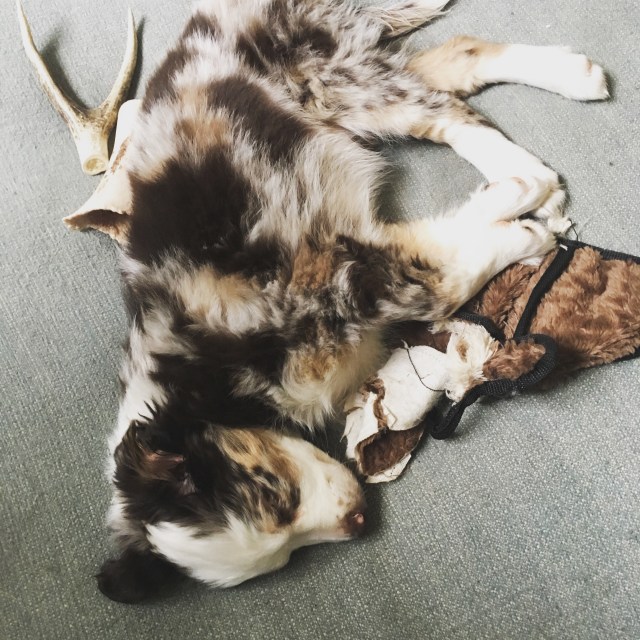
One of the most common concerns I address with new puppy families is biting! Puppies may look all cute and cuddly but sometimes they feel like little menaces with those super sharp puppy teeth! This can be especially trying if you have children who want to be able to interact with the puppy.

Most puppies chew on everything – they don’t have hands so they use their mouths. If you watch a puppy with adult dogs they play with their teeth and adult dogs tend to tolerate quite a lot of biting on themselves by puppies. When we’re asking a puppy not to bite or mouth us we are asking them to do something that is against their natural instinct therefore making it difficult.

This doesn’t mean you have to be a slave to puppy mouthing – and in fact you shouldn’t! One of the most important lessons to teach your new pup is what they can and can’t do with humans.

Let’s first examine the potential causes behind puppy mouthing:

  • Puppies tend to bite more when they are over tired. Ensure your puppy is getting scheduled naps/breaks during the day. Most puppies need to sleep around 18hrs/day. If your pup is over tired or over excited then mouthing will be worse.
  • Puppies are teething and need something to chew on – we see this in human babies too! Great chews are extremely important part of puppy raising.
  • Puppies need to learn from other dogs – mature, calm, adult dogs ideally. Make sure your puppy gets play time with a good mentor dog on a daily basis.


img_3860

Now what to do about puppy biting?

  1. Teach your puppy what you want them to chew on. This means having an assortment of safe chews and toys available. If your pup easily gets bored try rotating the toys/chews, use interactive toys that you can put some food in and even do a toy exchange with friends.
  2. Teach your puppy to leave it on cue. This will allow you to ask your puppy to stop chewing on items that you don’t want them to have or can be used if the puppy bites you too hard!
  3. For adults only (not kids) I suggest allowing the puppy to softly chew on hands/fingers and as soon as they chew too hard you would yelp or say ouch. Immediately praise your puppy if they stop or switch to a more gentle approach. If your pup is unresponsive then get up and walk away for a moment. This will teach your pup that hard bites make you go away.
  4. Teach your kids to be a “tree” when your puppy gets too bitey or excited. Have them freeze in place and call you to come intervene. Remember kids should be closely supervised with all dogs all the time.

Avoid physically discipling your puppy for mouthing. This will scare your pup and potentially damage your relationship with them. Puppies need to bite and it’s natural.

If your puppy is biting you in a threat display – like to guard a toy or food – please contact a positive reinforcement trainer immediately to assist you with a resource guarding protocol. While puppies do chew/mouth/bite they shouldn’t be aggressively guarding or attacking anyone – other pets or humans. Most puppy aggression cases can be resolved with the early intervention of a professional.

img_3874

Posted in puppy | Tagged , , , , , , | Leave a comment

Settling in a New Puppy

Meet Story my new Australian Shepherd pup – she’s 8.5 weeks old and ready to move in with my crew and I.

img_3759-2

Every new puppy is different – I’ve had my share and there’s none that are the same even if they are the same breed or from the same lines.

The most important thing to keep in mind over the first few days is that your puppy has had a dramatic life change and everything is new. They may be scared or ready to go but both are ok.

I try to set my puppy up for the rules they will have as an adult dog from day one. This means that if I don’t want my full sized adult dog on the couch then I won’t bring my puppy up there. Also if I don’t want my full sized adult dog sleeping in my bed then I’m not going to do it with the puppy. THIS IS HARD.

My priorities when I first bring home a new puppy are:

  • Ensuring the puppy is healthy – good stools, eating and drinking well
  • The puppy begins learning what they can and can’t chew on, I provide copious amounts of chews with different textures
  • The puppy meets my other dogs and begins learning to respect them, I don’t expect my adult dogs to discipline or train my puppy. I step in when I need to and redirect the puppy to give my adults a break.
  • I start teaching my puppy that a crate is a safe and happy place to be. I feed meals in there, I use it for short durations of alone time with a nice tasty snack and I use it for bedtime.
  • Bedtime is so hard – often new puppies can’t settle to sleep on their own (although some can!). I always use a crate as it helps with house training and keeping my puppy out of trouble over night. Some people prefer x pens or just a puppy safe room. If your puppy really struggles a crate by your bed that you slowly move to the location of your choice can help.


img_3764-2

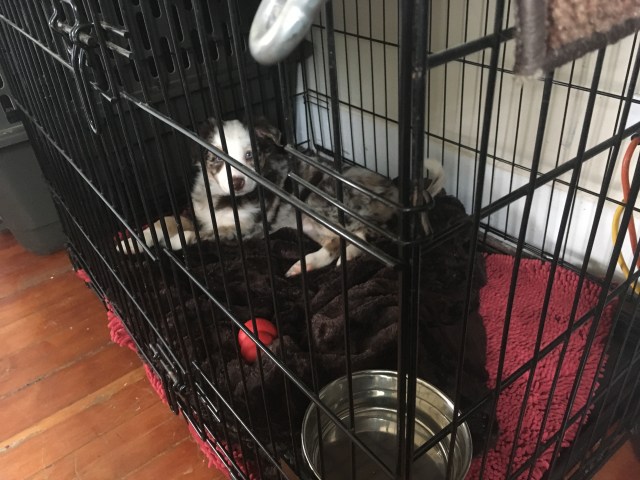
Story is pictured above in her crate (well one of our crates) with a stuffed kong, water and supervision. She’s hanging out in my office learning to be happy with the door shut. She hates when I leave her alone so we’re working on settling in the crate with me here and will gradually add more and more alone time. I often do closed door sessions when puppies are hungry and want their snack or sleepy and ready to relax. I always make sure they’ve had a bathroom break before I put them in. If your puppy panics in the crate work with the door open for awhile.

Posted in puppy | Tagged , , , , | Leave a comment

How to successfully foster a dog

Getting a new dog from a rescue or shelter has become extremely common place and there has been an increase in that amount of pet lovers fostering a pet. Foster parent programs vary from rescue to rescue but the premise is always the same – accept an unknown dog into your home and keep that pet there until they are ready to be adopted to a permanent home. There’s language that has evolved around this practice including “foster failure” where the foster parent adopts the dog they were taking care of instead of adopting the dog to a new family.

With the raise of the foster care system for dogs there’s also a lot that families should know how to successfully foster a dog. I’ve had countless foster dogs and every single one had a different story, needs and history behind them. I’ve also provided training support for years and years to foster dogs and their caregivers. With all that experience I’ve come to learn a few important tips for successfully fostering a dog.

bailey

Your foster dog will most likely have an unknown history and temperament. This is important to remember. A dog arriving in your home is coming from a mental space of stress – they’ve been removed from their home, they’ve been staying in a stressful shelter, they have been abused or neglected, they may have a medical issue or concern, etc. This means that this dog coming into your home isn’t a happy go lucky family pet that’s completely comfortable and carefree.

Keep the dog’s area quiet for the first several days – and longer if they need it. This means to hold back on introductions to children in the home or other pets. Let the dog unwind and understand that they are safe, will be provided with food, water and a warm bed. The dog needs to adjust to this before anything else can and should happen.

If you have done a meet and greet with your pets or children then ensure the foster dog has a quiet space to go to get away from it all if they want to.

Don’t assume the foster dog is friendly with new people, children or other pets. Don’t assume the foster dog can share toys, sleeping space, food or water with others. Even a behaviour assessment that is done in advance of placement can be wrong – if the dog is shut down from stress then the assessor won’t see who the dog really is until they become comfortable.

Adjustment periods for foster dogs can be anywhere from a few hours to months. It depends on the dog and the foster dog sets the pace.
jackie

Don’t treat your foster like your own dog. This one is a hard one for people but honestly unless you are actually keeping your foster dog then don’t set them up to fail. Don’t sleep with your foster dog in your bed. Don’t allow your foster dog on the couch. Don’t allow your foster dog to hyper bond to you or other pets in your home. You want this dog to adjust to a new, permanent family that may have different rules and expectations than you do. I always try to teach new fosters great manners – sit, down, stay, leave it, come, walking on leash, etc. I do so with patience and kindness but I do insist on manners. I also crate train my foster dogs – it sets them up for success in their new home and makes them more adoptable.

maya

Reach out for help when you have concerns. Often foster families aren’t completely honest with the rescue. They worry if they paint the foster dog in a bad light then the dog may be moved to a new foster home or even euthanized. This can be problematic. I’ve seen foster dogs seriously injure people and other pets in the home because the foster family kept concerns to themselves. This means the foster dog didn’t get the help they needed, the pets or people in the home were injured and the foster home was no longer open to other pets needing care.

Report all concerns to your rescue. A good rescue will have training and behaviour support in place for foster dogs. This means that you can get help with separation anxiety, resource guarding, general stress, reactivity and yes even aggression. Once you have assistance the dog is in a better position to improve and eventually be adoptable.

If possible try to take a manners or fun sports class with your foster dog. This gets the dog out of the home to meet new people and dogs, improve their skills and you can develop a relationship with a dog trainer who can make life easier. This improves the adoptability of your foster as well as the chance of this dog staying permanently with the adoptive family.

maxi


Posted in General Advice | Tagged , , , , , | Leave a comment

Sibling Rivalry

One of the most difficult issues to deal with is two dogs (related or not) that can’t get along but have to live together. Sometimes the issues are sporadic and sometimes the dogs can’t even see one another. This causes the dogs as well as their families a huge amount of stress.

Situations of intra-household aggression can vary drastically and it’s important to not let dogs work it out on their own. One instance of aggression can turn into a cycle where the dogs either fight or one dog is bullied and as a result has a poor quality of life.

heidimaggiemarco

Many owners often describe these issues as coming out of no where but that’s generally not the case. Many times aggression can be caused by one of the following:

  • A medical issue in one of the dogs (diagnosed or unknown)
  • Resource guarding food, toys, humans, sleeping areas, water bowls, etc.
  • Over excitement caused by the doorbell, dogs walking by the home, etc.
  • Extreme attention seeking behaviour often described by owners as “jealously”
  • Lack of appropriate exercise and activities
  • An adolescent dog and a senior dog testing out the changing dynamics in their relationship
  • Siblings (aggression among siblings is extremely common and makes up about 50% of the intra-household aggression cases I see). I highly recommend never getting siblings or even two dogs of the same age to help prevent this from occurring.

marcominnie

Here are a few suggestions for immediate relief however I strongly recommend contacting an experienced trainer to work with you and your dogs. It’s very difficult to see the whole picture when it’s your own pets.

  1. Feed dogs separately – this goes for meals, treats and bones
  2. Ensure dogs have multiple places to drink, sleep and play so they can have their own space if they desire it
  3. Give older dogs a break from high energy dogs. I recommend naps for puppies and even just separating dogs into different spaces for down time throughout the day
  4. Don’t ever leave dogs alone together who have a history of aggression. Issues can blow up when you’re not around to stop them
  5. Keep toys put away unless the dogs can share them nicely. If a dispute occurs remove the toy immediately from all dogs
  6. Ensure your dogs have adequate exercise and have a chance to do relaxation activities like smelling when out and about
  7. Spend one on one time with each of your dogs every single day
  8. Consider taking a class with your dog to get them out and trying something new
  9. Establish strong obedience with each dog so that they can be asked to move away from one another and settle in a selected spot
  10. Don’t ever allow dogs to work it out on their own. Even a non-injury causing fight damages the relationship and will increase the likelihood of an ongoing issue

jasperheidi

Posted in Behaviour Issues | Tagged , , , , , , | Leave a comment

Loose Leash Walking – I’m in Charge Right?

There’s this common prevalent myth that if your dog walks nicely on leash then you are the leader and all behaviour problems will disappear. I don’t know WHY people believe this but they do. Loose leash walking is incredibly important to people so here’s some realities about it and how to get it!

  1. Whether your dog pulls on leash or not will not predict how well they behave in other situations. For example just because my dog walks well on leash doesn’t mean he’s friendly or just because my dog doesn’t walk well on leash doesn’t mean she’s not well trained in other areas.
  2. Loose leash walking is extremely difficult for certain dogs depending on their energy level, confidence and natural gait speed. For example I never taught my French Bulldog how to walk nicely on leash – she was naturally good at it because she was shy and liked to stay close me. On the other hand it was very hard to teach both my Australian Shepherd and Pointer to walk nicely on leash because they are friendly, outgoing and move quickly.

Now whether your dog is a natural or not most people like to have a dog that can walk well on leash. It’s an important skill in certain situations so I teach it to all my dogs.

Key considerations:

  1. Teach your dog where you want them to walk. I teach my dogs to walk in heel position on my left side. However you could easily teach your dog to walk on your right side. Pick a side and teach your dog that that spot is desirable. I do this by dropping treats or toys every time they are in the heeling “zone”. My dogs realize cool things happen there and they start to hang out in that zone. I find teaching them to heel off leash first is actually easier.

marcoheelzone

  1. I add movement to the zone. We take a few steps and the reward falls. My dogs soon realize the zone moves with me.
  2. I never allow my dogs to pull me on leash. Every time they move forward when they pull they are reinforced for it. I’ll wait patiently or go the other way.
  3. I practice loose leash walking A LOT with hard to train dogs. This means at least 5-10 minutes every day and it can take A LONG TIME.
  4. I exercise my dogs off leash as much as possible so they can run, smell and burn off energy. Heeling all the time is no way to exercise my hyper boys. It does work well for my senior, small girls though.
  5. Having a dog that heels on leash will not fix aggression, reactivity, resource guarding, poor greeting behaviour or recall. It will however allow you to walk your dog comfortable on leash – that’s all! If you have other behaviour issues then you need to work on those issue directly.
  6. I do believe certain pieces of equipment can help with loose leash walking. I recommend harnesses particularly ones like the Freedom Harness or a head halter like the Gentle Leader.

russheeling

Posted in General Advice, Uncategorized | Tagged , , , , , | Leave a comment

Just Knee Him In The Chest

I was out for a nice walk with my family the other day. We have this great park with an ocean view that we all like to check out.

The spot was full of people and their dogs. The area is supposed to be an on leash area but as most rules go some people decided to have their dogs off leash anyway. Not a great practice but not bothersome to us.

At one point a really friendly, medium sized dog approached our group. The dog was off leash and quite young. My step daughter asked the owner if she could pet her dog and the lady said of course. She said her dog loves children. My step daughter went to pet the dog and the dog jumped on her. It’s not a huge deal as my step daughter is well versed in dogs and simply asked the dog to sit. This didn’t however stop the owner from requesting that my child knee her dog in the chest! She was quite sure this would stop the dog from jumping up.

This is one of those moments where the dog trainer in me just goes crazy. Some of the thoughts that run through my head:

  • She’s asking my child to be physically violent to a dog
  • She’s asking my child to train her dog for her
  • She’s willing to allow her dog to be injured
  • She’s not using a leash and yet she’s concerned about her dog jumping on us
  • She hasn’t moved an inch to call her dog or come get her dog since he’s jumping up

So after all those thoughts went through my head we went on our way. However that means there’s this big gap in knowledge that the average pet owner might not know – how do you train a dog to stop jumping on a person?

Well there’s not one perfect way. There’s a method I use that works pretty great though. We teach the dog to sit.

It’s simple. It’s effective. It’s what we all want. Now why didn’t she think of that? Most likely because training a dog to do what we want is harder than punishing a dog for doing something we don’t want them to do. I find that most people are willing to focus on the problem rather than the solution. So any time you have an issue with your dog ask yourself this: what would you like your dog to do instead? And then teach them what you want.

Here are my steps for teaching a dog to greet politely:

  1. Teach my dog how to sit on cue (hand signal plus verbal command)
  2. Teach my dog how to sit on cue with distractions around
  3. Teach my dog to sit on cue every time a person walks by
  4. Teach my dog to stay
  5. Teach my dog to stay with distractions
  6. Teach my dog to sit and stay while people walk by
  7. Teach my dog to sit and stay while I pet him/her
  8. Teach my dog to sit and stay while other people we know pet him/her
  9. Teach my dog to sit and stay while strangers pet him/her
  10. Teach my dog a great recall in case he/she is ever about to jump up

groupsit

It looks like a lot of work but honestly it isn’t that hard. If you need help then find a great positive reinforcement trainer to work with you on sit and stay. They are crucial life skills for dogs. You could even do a great stand stay if you don’t want to ask for a sit at all.

And without further ado here’s a great article by Stanley Coren on how to keep a dog from jumping on people. Click here for article. Just in case you want to learn more about this topic.

Please never ever ask someone to injure your dog in order to train them. Whether it be yourself or a stranger this isn’t a safe or an effective way to train your pet.

puppysit

Posted in General Advice | Tagged , , , , , , | Leave a comment

The First Thing I Teach A Dog

Whether it’s a puppy or an adult dog there’s one common thing that I teach them first. This is pretty much the most important foundation skill. And now that we’ve had all this build up:

I teach them their name and that looking at me when I ask them makes good things happen. I even teach this when I have a foster dog who already “knows” their name.

If a dog can’t look at you when you need them to then you’re not going to get anything else from them. It has the added bonus of creating a positive association with me and kind of kicks off the beginning of a recall.

You can do this using your dog’s food, treats or toys. Anything works as long as your dog wants it. Motivation changes from dog to dog so don’t assume they all want the same thing.

I start off working in a quiet space inside my house. Just my newbie and me. I call the dog’s name once. If the dog looks at me on their own great – I say “Yes” and reward with said treat, kibble or toy. If the dog doesn’t look then I lure up from their nose to my eyes. As soon as they are looking up near my eyes I say “Yes” and reward.

Now some people think – this is silly the dog is just looking at that treat near your eyes. Well that’s where we start. I do this around 5 times and then I stop luring. I wait for the dog to select my face. You’ll be amazed how quickly they pick this up!

I practice this several times a day for around 5 minutes each time. As the dog gets better at it I increase the distractions and change up the environment. We will practice it all around the house, yard and on walks. Sometimes when there’s dogs or people near too.

Before long you have a dog that is extremely responsive to their name.

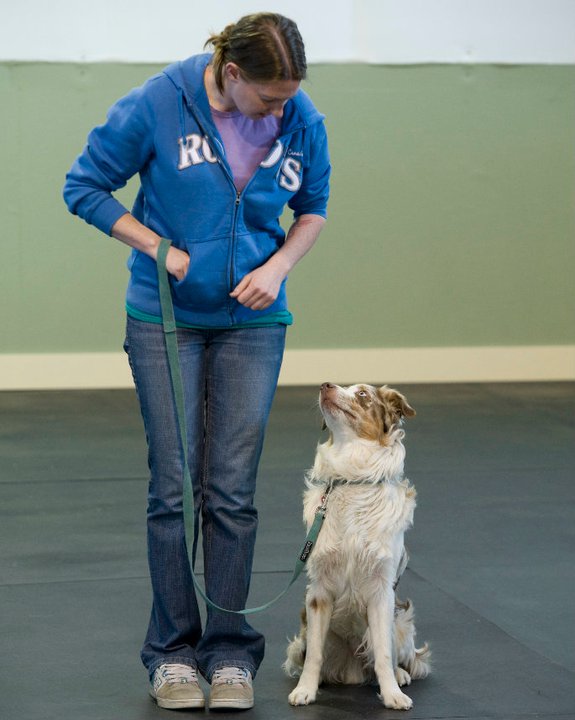
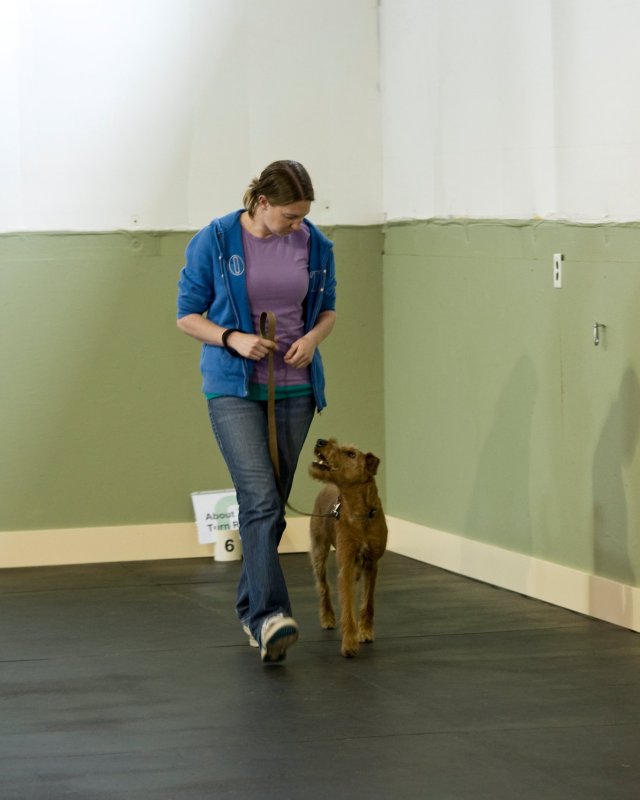
As you can see in this photo Marco is focused 100% on me while my mentor and coach  was giving me instructions in our Companion Dog Obedience class when he was still under 1 year old. Name attention keeps your dog out of trouble and ready to do what you ask of them next be it – sit, down, stay or come. Marco’s reward in this photo is his ball. He will do anything for his ball and it’s a great motivator.

marco-focus

Posted in General Advice, puppy, Uncategorized | Tagged , , , , , , | Leave a comment

New Puppy? How to Prepare

I’m getting a new puppy so I have puppy brain – and that means some pretty puppy centric posts coming your way!

I have 7 weeks to go before she arrives and here’s what I’m doing to get ready.

  • I have designed a training plan for her to cover house training, basic obedience, kennel games and interactive feeding (these are all things I teach people in an private training session either before or right after they get their own puppy)
  • I have found a great positive reinforcement agility class for her to attend that will tailor the exercises to be safe for puppies – this is important because I want to work with her around other dogs in a formal environment and I want to get her started on the foundations for agility
  • I’ve also made a list of equipment I need to work on body awareness exercises (great for all dogs not just performance dogs!). I’ll include those in future blog updates.
  • I have found a spot for her kennel and bed that won’t disrupt our other dogs and we can incorporate it into the routine now before she arrives to reduce stress on everyone else once she’s here
  • I have a section of the house that can be blocked off while I’m working so she’s safe while I work during the day (I work from home but I still don’t want her running all over unsupervised!)
  • I have found an appropriate harness for her to use for walking
  • I am working on modifying a few undesirable behaviours in my youngest dog now before she arrives so he’s off to the best start
  • And I have come up with a plan to allow her to learn how to be alone sometimes since I’m around all the time. I want a confident dog who can be left alone when I go out

It sounds like a lot of work but it’s not so much. It just takes some thought. It’s important that puppies get off to the right start. I do have one big task ahead of me – finding appropriate socialization places. I want to find places for her to meet friendly, healthy dogs (I’ll pester my new dog friends here on the island and schedule my Calgary friends when I’m in town there) as well as times to meet new people. It’s important for young pups to be exposed to different scenarios in the safest possible manner. So I’m making a list of ideas and will check those all out before she arrives.

And now to introduce my new arrival! Her name is Story and she’s currently 10 days old. She’s an Australian Shepherd from the same breeder as my dog Marco (Spinoff Enterprises).

img_3355

Posted in puppy | Tagged , , , , , , | 2 Comments

Don’t Shoot The Dog!

The hot topic of the day is Montreal’s new breed specific legislation (find more info: here). So I thought I’d weigh in on BSL in general and why it’s not effective.

Breed Specific Legislations (BSL) is typically enacted on a municipal or provincial level in Canada. These rules have also turned up at the federal level (Germany – here for more info) and throughout the United States. What is it exactly? Well it varies everywhere.

bullies2

Where I live we have BSL and it states that Pitbull type dogs must be muzzled until they pass their Canine Good Neighbour exam (see here for info). So it’s a pretty mild ruling for a few reasons. First people don’t have to get rid of their pets, they can continue to own the breed of their choice and the dog can “prove” him or herself through obedience testing. There are other places like the province of Ontario where you cannot own a Pitbull type dog or even travel with a Pitbull type dog through the province (see here for info). Dogs can face a lifetime of being muzzled (inhumane) and/or euthanasia for no reason other than their breed.

bullies3

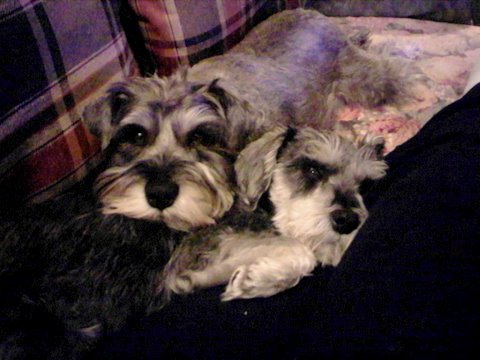
These rules don’t prevent dog bites or attacks. Why? Because ANY BREED of dog can bite and attack. In fact dog bites have increased in Ontario since they implemented their ban 10 years ago (see here for more info). There’s a lot of myths out there about “pitbulls” and in fact it’s hard to even know what a “pitbull” is since they aren’t a registered breed at all (see here for more info). So anyone who owns a muscular dog with a broad head can be discriminated against. Even my German Shorthaired Pointer could potentially be mistaken as a “pitbull”.

I have worked with bully breeds for over 10 years now. This includes English Bulldogs, Olde English Bulldogs, French Bulldogs, American Staffordshire Terriers, American Bull Staffordshire Terriers, Boxers, Mastiffs of all varieties, American Bulldogs, Valley Bulldogs, etc. They aren’t anymore aggressive than the Golden Retrievers or Chihuahuas that I’ve met. I’ve seen aggression across the spectrum of dog breeds.

There’s so much fear related to these breeds because a stereotype has developed against the “type” of people who own these dogs. Everyone pictures a violent drug dealer with a raging “pitbull” at the end of the leash. Well guys hate to break it to you but my clients who own bully breeds including “pitbull” type dogs are typically middle class families. They love their dogs and they spend time and money training their dogs to be good pets. These laws hurt everyday families who are typically good dog owners.

bullies1

I am just as likely to be bit by a Labrador as any breed listed in BSL. And in fact one of the worst attacks on my own dogs was a Labrador. We’ve also been attacked by a Jack Russel, West Highland Terrier and a Rottweiler. But never a “pitbull” – interesting. The Labrador attack on my Irish Terrier was actually the worst one too – he punctured my dog’s head in 3 places and he needed surgery. So much for a soft mouth! Any dog can do damage if they are in the wrong situation. Owners need to be accountable for their dogs across the breed spectrum.

bullies4

As a dog trainer what I would love to see is municipalities reward citizens for training their dogs. For example if a citizen completes a puppy class they should save money on their license every year. For every addition class or hour they spend with a Certified trainer they should save more. Want to know why? Because TRAINING PREVENTS DOG BITES. Let’s invest in responsible dog ownership and get over the breed discrimination laws that do not protect me, you or anyone!

Right now all Montreal has done is broken the hearts of regular families and placed a crushing demand on foster and adoptive homes in areas where BSL isn’t enacted. It’s discriminator and it’s not based on ANY science or study that states that it works. This is fear mongering and mythology.

Posted in General Advice | Tagged , , , , , , , , | Leave a comment

What is Canine Anxiety?

I recently attended a webinar on Building Resiliency in Dogs by Dr. Patricia McConnell. It was a great and free information session on how to increase confidence. This would be particularly great for rescue workers and families living with fearful or anxious dogs. And because I love to share great resources here’s where you can view a recording of the webinar.

remiwindow

This had me thinking about the fact that most people don’t even know what anxiety or fear looks like in dogs because it’s not always obvious.

The most common identifying traits are hiding, shaking, tail tucked, low body, etc. Most people can identify a dog in that state is fearful or anxious. However I routinely see families with fearful dogs and the owners weren’t even aware that was the issue!

Common overlooked behaviours include:

  • Growling
  • Won’t approach visitors or certain family members
  • House soiling – especially urine marking
  • Charging at people (family or visitors)
  • Bullying type behaviour with other dogs (includes guarding toys, food and sleeping areas)
  • Separation anxiety – whining when you leave, destructive behaviour, etc.

In fact many undesirable canine behaviours can be attributed to anxiety or fear. It can be hard to recognize this especially when you’re frustrated with your dog however if you remember Ari’s story sometimes you need to boost the confidence of your dog before you can deal with the problem.

Also keep in mind that there doesn’t always have to be a reason why a dog would have anxiety. Sometimes something small can create a major issue. Dogs can be anxious due to genetic predisposition, missed socialization, over socialization, an event during a fear period, an event in general that causes your dog fear, etc. Don’t get hung up the why.


Posted in Behaviour Issues | Tagged , , , , , , , , | Leave a comment